 Televisor LED COB todo en uno
 Pantallas LED flexibles
 Pantallas LED transparentes
 Cartel llevado
 Pantallas LED circulares
 Pantallas LED de columna
 Pantallas LED creativas y personalizadas
Análisis completo de 4 tecnologías principales de pantallas LED transparentes.
Todos hemos pasado alguna vez junto a pantallas semitransparentes en escaparates o en fachadas de cristal de edificios. Estas pantallas muestran anuncios con gran nitidez a la vez que dejan pasar la luz.
Their biggest selling point is transparency. Traditional LED screens suffer from fatal flaws like opacity, poor ventilation, excessive weight, heat dissipation issues, clunky structures, high power consumption, and obtrusive designs. It’s these pain points that gave rise to LED transparent screens. It is sleek, ultra-thin, and highly transparent solutions that blend technology with aesthetics.
Estas pantallas no solo pueden mostrar información del producto, sino que también integran software táctil, lo que permite a los consumidores tocar la pantalla para obtener más información mientras navegan.

Más allá de la publicidad, también sirven como elemento decorativo: hoteles y vestíbulos corporativos las utilizan como paredes de fondo, mostrando pinturas a la tinta en un momento y anuncios de marca al siguiente. Si además se les añade el logotipo de la empresa detrás de la pantalla, se eleva instantáneamente el valor tecnológico del espacio.
Hoy en día, las pantallas LED transparentes vienen en varias variantes: pantallas de rejilla LED transparentes, pantallas de película holográfica, cristal LED pantallas de cine, y pantallas de vidrio fotoeléctricas LED. Permítanos guiarle en estos detalles.
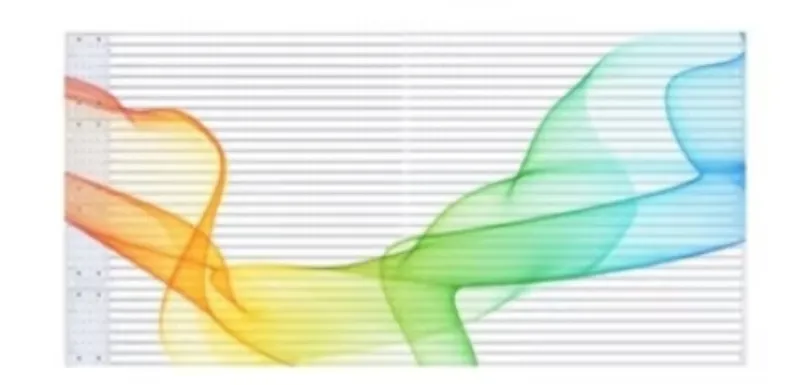
Pantalla de rejilla transparente LED:

Fabricantes de pantallas LED design LED transparent grid screens with a hollowed-out PCB structure. This is what creates their transparency. In usaual, it can improve a transparency rate of 55% to 90%.
Estas pantallas conservan la iluminación y los ángulos de visión originales de ventanas, fachadas de vidrio y suelos. Desde la distancia, parecen casi tan transparentes como el cristal, pero muestran contenido de vídeo con una nitidez excepcional. Su perfil delgado, de tan solo 8 cm de grosor, y su diseño ligero, de apenas 6 kg por metro cuadrado, las hacen ideales para este tipo de aplicaciones.
One of their standout features is hassle-free installation. Unlike traditional LED screens that require heavy steel frames, you can fix grid screens directly to glass curtain walls. Common module sizes include 1000*125mm, with cabinet sizes of 1000*1000mm. You can quick seamless assembly for large areas. This not only saves significant installation time but also cuts maintenance costs. The technicians can service the screens from indoors, safely and efficiently.
Energy efficiency is another big plus. They eliminate the need for traditional cooling systems or air conditioning for heat dissipation. It can reduce energy consumption by 35% compared to standard LED screens. With their low cost and modular design, and you have a cost-effective solution for commercial and public spaces.
Dicho esto, tienen limitaciones. La estructura de la cuadrícula puede afectar la nitidez de la imagen. Si se observa desde cierto ángulo, las imágenes pueden distorsionarse o presentar un brillo desigual.
Their ideal applications include temporary exhibition product displays and brand store digital windows . They’re also the top choice for large-area glass curtain wall advertising, fitting seamlessly with any curtain wall specification, such as:
- Bancos
- Centros comerciales
- Teatros
- Calles comerciales
- Cadenas de tiendas
- Hoteles
- Edificios municipales
- Puntos de referencia.
Pantalla de película holográfica LED:
Pantallas de película holográfica LED often called film screens, use specialized bare chips and integrated LED beads . LED display Manufacturers mount these LEDs on high-transparency PCB boards, then use a proprietary gluing process to integrate the display modules into a light-emitting, high-transparency optical lens substrate. Therefore, the screen bends slightly though its flexibility is limited.
A key design feature is the placement of power supplies and control boxes on one side, allowing top-bottom splice without visible keels .
Podrá elegir entre una variedad de modelos, como P3.5, P3.91, P5, P6.25 y P8. Los precios varían considerablemente, desde unos pocos miles hasta decenas de miles de RMB por metro cuadrado, según el modelo y las especificaciones.
La instalación es muy sencilla, con dos métodos comunes: montaje directo y suspensión.
Direct mounting involves attaching the screen directly to glass without keels. It enabes left-right and top-bottom tiling for display heights or widths of 2–2.4 meters. At less than 2mm thick, these screens blend seamlessly with curved glass surfaces. It is perfect for commercial windows and glass curtain walls. Hanging is equally easy. The lightweight design imposes no strict load-bearing requirements, and the screen can be bent or cut to size for custom shapes.
Sus ventajas son claras:
- Ultradelgado y ligero,
- Fácil instalación con mínimo impacto en las estructuras del edificio.
- Bajo costo
- Alta capacidad de personalización para satisfacer necesidades individuales.
But installation requires attention to detail. You ensure the base surface is clean, flat, and dry, use the right tools and processes, and avoid harsh environments ,like extreme humidity or temperature)during installation. They are suitable for high-end store windows, curved glass facades, and temporary pop-up displays.
Pantalla de película de cristal LED:

LED crystal film screens use LED bare chip ball-mounting technology. Their panels consist of transparent crystal film sheets with etched transparent mesh circuits. After mounting components, LED screen manufacturers apply a vacuum encapsulation process. It can create a flexible, transparent display with no visible barriers, delivering flawless imaging.
These screens use micron-level light sources and four-in-one packaging, with no electronic components other than the LED beads. They also have a “breakpoint continuation” design. If one pixel fails, it won’t affect the rest of the screen. In addition, their biggest advantage is extreme flexibility. You can cut them to any size or shape and attach them to glass or walls of any curvature.
Installation is incredibly simple. No steel frames are needed, and you don’t have to alter the building’s exterior. It can significantly reduce transportation and installation costs.
With a maximum transparency rate of 95%, they don’t block natural light. Just stick the film screen to the surface, connect the signal and power, and you’re good to go. They’re ideal for creative installations, irregular-shaped displays and indoor spaces,such as shopping mall atriums or hotel lobbies.
Pantalla de vidrio fotoeléctrica LED:

Las pantallas de vidrio fotoeléctrico LED combinan tres componentes principales: vidrio conductor, vidrio superficial y chips LED integrados en una capa intermedia de PVB. Los fabricantes de pantallas LED utilizan circuitos grabados con láser para habilitar funciones como la visualización de patrones, iluminación, texto y reproducción de video. Estas pantallas no son simples pantallas; son nuevos materiales de construcción de alta tecnología que combinan eficiencia energética, seguridad y practicidad.
They retain all the advantages of glass, including ultra-high transparency ,up to 90% via dry PVB lamination and ultra-thinness. Therefore, they are perfect for indoor glass partitions, atrium railings, and any glass curtain wall or observation elevator application. Their standout pros include high hollow rate, a futuristic look, and excellent flatness.
However, they have notable limitations. they can’t be seamlessly tiled, can’t bend, suffer from poor circuit adhesion, and have low brightness. Maintenance is also challenging due to the circuit adhesion issue. On the plus side, they support custom sizes for any application scenario and are easy to install. It is suitable for indoor decorative displays, like office glass partitions or museum exhibit dividers.
Diferencia clave: Pantalla de película LED frente a pantalla de película de cristal LED
LED film screens and crystal film screens are easy to confuse. they’re both niche products under the transparent LED screen . But they have some differences:
– Peso: Las pantallas de película de cristal son más ligeras que las pantallas de película tradicionales. Son más fáciles de manipular e instalar en superficies frágiles.
– Transparency: Crystal film screens offer higher transparency up to 95% compared to film screens. It can preserve more natural light.
– Flexibility: Both are flexible, but crystal film screens can bend to more extreme curvatures. It can support more creative custom shapes.
– Instalación: Ambos se montan fácilmente en muros cortina de vidrio, sin necesidad de realizar modificaciones importantes en el edificio. Si bien el menor peso de las pantallas de película de cristal facilita ligeramente su manipulación.
Perspectivas de futuro: Evolucionando hacia mayores posibilidades creativas.
Con el avance de la tecnología LED, las pantallas transparentes seguirán evolucionando. Se están volviendo más flexibles, transparentes, eficientes energéticamente y asequibles. Ya sea que busque una solución de muro cortina de vidrio a gran escala, una pantalla curva ultrafina, una instalación creativa con forma personalizada o un material de construcción de alta tecnología, existe una tecnología de pantalla transparente adaptada a sus necesidades.
The key to choosing the right one. You can consider factors like installation environment , transparency needs, brightness requirements, budget, and maintenance accessibility. For large outdoor glass curtain walls, You can choose grid screens for their durability and cost-effectiveness. For curved indoor displays, you can choose crystal film screens for their flexibility and high transparency. For office partitions, you can choose photoelectric glass screens due to sleek, decorative solution, just avoid outdoor or high-brightness needs.
Conclusión:
Transparent screens have redefined how we blend digital content with physical spaces. It is turning ordinary glass surfaces into dynamic, engaging displays. As technology continues to innovate, we can expect even more creative applications.
Analice sus requisitos de brillo.
Cuéntenos qué funciones necesita la pantalla. Podemos sugerirle una configuración cuadrada y confirmar los detalles de brillo y potencia para su presupuesto.
Solicitar cotización